
Lung Cancer
Lung Cancer
Lung cancer is a serious condition that develops when abnormal cells in the lungs grow uncontrollably. It can affect breathing, lung function and overall health. Early diagnosis, accurate staging and appropriate treatment planning are important for managing the disease and improving a patient's quality of life.
If you are looking for Lung Cancer Treatment in Faridabad, consulting an experienced medical oncologist can help you understand your diagnosis and explore suitable treatment options.
Dr. Ashish B. Agrawal is a Medical Oncologist, Haematologist and BMT specialist with experience in managing different types of cancer. His approach focuses on evidence-based treatment, personalised care and selecting appropriate therapies according to the cancer type, stage and individual patient requirements.
Depending on the diagnosis, lung cancer treatment may involve chemotherapy, targeted therapy, immunotherapy, surgery, radiation therapy or a combination of these approaches.
What Is Lung Cancer?
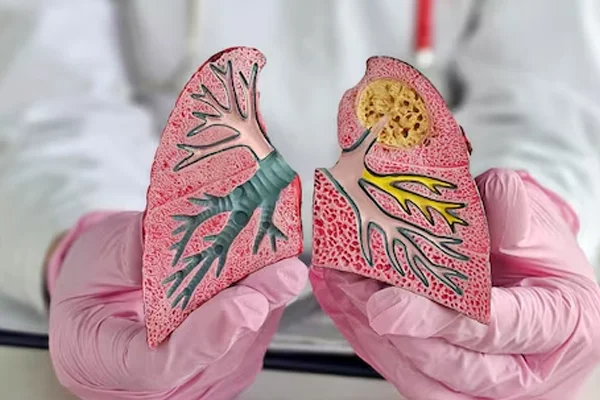
Lung cancer develops when cells in the lung begin growing abnormally and form a tumour. These cells may invade nearby tissues or spread to other parts of the body.
Lung cancer is broadly classified into two main categories: non-small cell lung cancer (NSCLC) and small cell lung cancer (SCLC). These types differ in their biological characteristics, growth patterns and treatment approaches.
Smoking is a major risk factor, but lung cancer can also develop in people who have never smoked. Other risk factors may include exposure to radon, air pollution, occupational carcinogens and second-hand smoke.
Patients seeking Lung Cancer Treatment in Faridabad should undergo appropriate diagnostic evaluation to establish the cancer type, determine its stage and identify the most suitable treatment strategy.
Common Symptoms of Lung Cancer
Symptoms of lung cancer may develop gradually and can sometimes resemble other respiratory conditions. Persistent or unexplained symptoms should be assessed by a healthcare professional.
Common symptoms include:
- A persistent or worsening cough
- Coughing up blood
- Shortness of breath
- Chest pain or discomfort
- Recurrent respiratory infections
- Unexplained weight loss
- Persistent fatigue or weakness
- Hoarseness or voice changes
- Loss of appetite
- Bone pain or persistent headaches in some advanced cases
These symptoms do not always indicate lung cancer. However, timely medical evaluation can help identify the underlying cause and determine whether further investigations are required.
Types of Lung Cancer
1. Non-Small Cell Lung Cancer (NSCLC)
Non-small cell lung cancer is the most common category of lung cancer. Its major subtypes include adenocarcinoma, squamous cell carcinoma and large cell carcinoma.
Treatment depends on the cancer stage, tumour characteristics, molecular test results and the patient's overall health.
2. Small Cell Lung Cancer (SCLC)
Small cell lung cancer is a less common type that can grow and spread rapidly. Treatment frequently involves chemotherapy and may include immunotherapy or radiation therapy, depending on the disease stage and individual circumstances.
3. Lung Adenocarcinoma
Adenocarcinoma is a subtype of non-small cell lung cancer that often develops in the outer areas of the lungs. Molecular testing may identify specific genetic changes that can help guide targeted treatment.
4. Squamous Cell Lung Carcinoma
Squamous cell carcinoma is another type of non-small cell lung cancer, often associated with tobacco exposure. Treatment is determined by the cancer stage, pathology and overall health.
Diagnosis of Lung Cancer
Accurate diagnosis is essential for selecting the most appropriate lung cancer treatment. Investigations are recommended according to symptoms, imaging findings and clinical assessment.
Imaging Tests
Chest CT scans, PET-CT scans, MRI or other imaging investigations may be recommended to evaluate the tumour and assess whether the disease has spread.
Bronchoscopy
Bronchoscopy allows doctors to examine the airways using a specialised instrument. It may also help obtain tissue samples from suspicious areas.
Biopsy
A biopsy involves collecting a sample of tissue or cells for laboratory examination. It helps confirm the diagnosis and identify the cancer type.
Molecular Testing
Molecular testing may identify genetic changes that can guide targeted therapy in eligible patients with non-small cell lung cancer.
Biomarker Testing
Testing for relevant biomarkers, including PD-L1 in selected cases, may help determine whether immunotherapy is an appropriate treatment option.
Staging Investigations
Additional imaging and other tests may be needed to determine the extent of the cancer and guide treatment planning.
Not every patient requires every investigation. The diagnostic approach is tailored to the suspected cancer type and individual clinical findings.
Lung Cancer Treatment Options in Faridabad
The most appropriate treatment depends on the cancer type, stage, molecular profile, overall health and treatment goals. Patients searching for Lung Cancer Treatment in Faridabad may require one or several treatment approaches.
1. Chemotherapy
Chemotherapy uses medicines to destroy cancer cells or slow their growth. It may be used for small cell lung cancer and selected cases of non-small cell lung cancer.
Chemotherapy may be recommended alone or in combination with immunotherapy, radiation therapy or other treatments. The treatment regimen depends on the diagnosis and the patient's medical condition.
2. Targeted Therapy
Targeted therapy works against specific genetic changes or proteins involved in cancer growth. For eligible patients, it can offer an important treatment option, particularly in certain forms of non-small cell lung cancer.
Molecular testing is often necessary to identify whether a tumour has a change that can be treated with an available targeted medicine.
The choice of treatment depends on the genetic findings, disease stage, previous treatment and current clinical recommendations.
3. Immunotherapy
Immunotherapy helps the immune system recognise and attack cancer cells. It may be used in selected patients with non-small cell or small cell lung cancer.
Its suitability depends on the cancer type, stage, relevant biomarkers, previous treatment and overall health. Immunotherapy may be used alone or alongside chemotherapy in certain clinical situations.
It is not appropriate for every patient, and the potential benefits and risks should be discussed with the treating oncologist.
4. Radiation Therapy
Radiation therapy uses high-energy radiation to damage cancer cells. It may be recommended for localised disease, in combination with other treatments, or to relieve symptoms in selected advanced cases.
The radiation oncology team determines the appropriate approach based on the tumour's location, stage and treatment objectives.
5. Surgery
Surgery may be considered for selected patients with early-stage lung cancer when the tumour can be removed and the patient is fit for the procedure.
The decision depends on tumour location, disease extent, lung function and overall health. Surgery may be combined with systemic treatment depending on the clinical situation.
6. Personalised Treatment Planning
Modern lung cancer care increasingly relies on accurate diagnosis, molecular testing and multidisciplinary assessment. Medical oncologists may coordinate with pulmonologists, thoracic surgeons, radiation oncologists, radiologists and pathologists to develop a suitable treatment plan.
This approach helps match the treatment to the patient's cancer characteristics and medical needs.
Why Choose Dr. Ashish B. Agrawal for Lung Cancer Treatment?
Selecting a medical oncologist is an important step in navigating a lung cancer diagnosis. Dr. Ashish B. Agrawal has specialised training in Medical Oncology and General Medicine and experience in managing different malignancies.
Patients may benefit from:
- Specialised Oncology Expertise: Medical assessment and treatment planning for lung cancer.
- Personalised Treatment Strategies: Recommendations based on cancer type, stage and individual health requirements.
- Evidence-Based Care: Decisions guided by current clinical evidence and recognised oncology guidelines.
- Advanced Treatment Options: Assessment for chemotherapy, targeted therapy and immunotherapy when appropriate.
- Biomarker-Guided Treatment: Consideration of relevant molecular and biomarker results when selecting therapies.
- Multidisciplinary Coordination: Collaboration with other specialists when surgery, radiation or additional expertise is required.
- Patient Education: Clear explanations of treatment choices, potential side effects and follow-up care.
Treatment recommendations and outcomes vary according to each patient's diagnosis and response to therapy.
Importance of Early Diagnosis
Early evaluation of persistent respiratory symptoms can help identify their cause and determine whether additional testing is needed. Some lung cancers are discovered through imaging before symptoms develop.
People at increased risk may benefit from discussing lung cancer screening with a healthcare professional. Low-dose CT screening is recommended for certain eligible high-risk individuals, depending on age and smoking history.
Avoiding tobacco and exposure to second-hand smoke can help reduce lung cancer risk.
If you are searching for Lung Cancer Treatment in Faridabad, timely consultation can help you understand the diagnostic process and discuss treatment options appropriate for your condition.
When Should You Consult a Medical Oncologist?
Consider consulting a medical oncologist if:
- A biopsy confirms lung cancer.
- Your doctor recommends chemotherapy or another systemic treatment.
- You need guidance about targeted therapy or immunotherapy.
- Molecular or biomarker testing has been recommended.
- The cancer has returned or spread to other organs.
- You need a specialist opinion about available treatment options.
Bring your biopsy reports, imaging scans, molecular test results, prescriptions and previous treatment records to your consultation.
Conclusion
Lung cancer requires an individualised treatment approach based on the cancer type, stage, molecular characteristics and the patient's overall health. Treatment may include chemotherapy, targeted therapy, immunotherapy, radiation therapy or surgery.
Dr. Ashish B. Agrawal provides specialised medical oncology care for patients with different types of cancer. If you are considering Lung Cancer Treatment in Faridabad, a consultation can help you understand your diagnosis, explore suitable treatment approaches and plan the next steps in your care.
Frequently Asked Questions
1. Who provides lung cancer treatment in Faridabad?
Dr. Ashish B. Agrawal is a Medical Oncologist with experience in managing various cancers. Contact his current hospital or clinic to confirm consultation availability and the services offered.
2. What are the common symptoms of lung cancer?
Common symptoms include a persistent cough, coughing up blood, chest discomfort, shortness of breath, unexplained weight loss and recurrent respiratory infections. Persistent or unexplained symptoms should be evaluated by a healthcare professional.
3. What treatments are available for lung cancer?
Treatment options may include chemotherapy, targeted therapy, immunotherapy, radiation therapy and surgery. The appropriate treatment depends on the cancer type, stage, molecular profile and overall health.
4. Can targeted therapy help treat lung cancer?
Yes. Targeted therapy can be effective for selected patients whose tumours have specific genetic changes. Molecular testing helps determine whether an appropriate targeted treatment is available.
5. Is immunotherapy suitable for every lung cancer patient?
No. Immunotherapy is suitable for selected patients based on the cancer type, stage, biomarkers and other clinical factors. The treating oncologist determines whether it is an appropriate option.
6. Is lung cancer treatable?
Lung cancer can be treated using different approaches, and some early-stage cancers may be treated with curative intent. Outcomes depend on the cancer type, stage, tumour characteristics, overall health and response to treatment.
7. How can I book an appointment for lung cancer treatment in Faridabad?
Contact Dr. Ashish B. Agrawal's current hospital or clinic to confirm appointment availability and consultation details. Bring your relevant medical reports, imaging scans and previous treatment records.


